t: 07979 391364 e: lucy@neovitae.co.uk

  • Home
  • Who we are
  • Our values
  • Our services
  • Blog
  • Contact us

Why you could be a leader and not know it

April 21, 2023 by Neovitae

When you talk about being ‘a leader’ and showcasing ‘leadership’ what are the first words that come to mind?

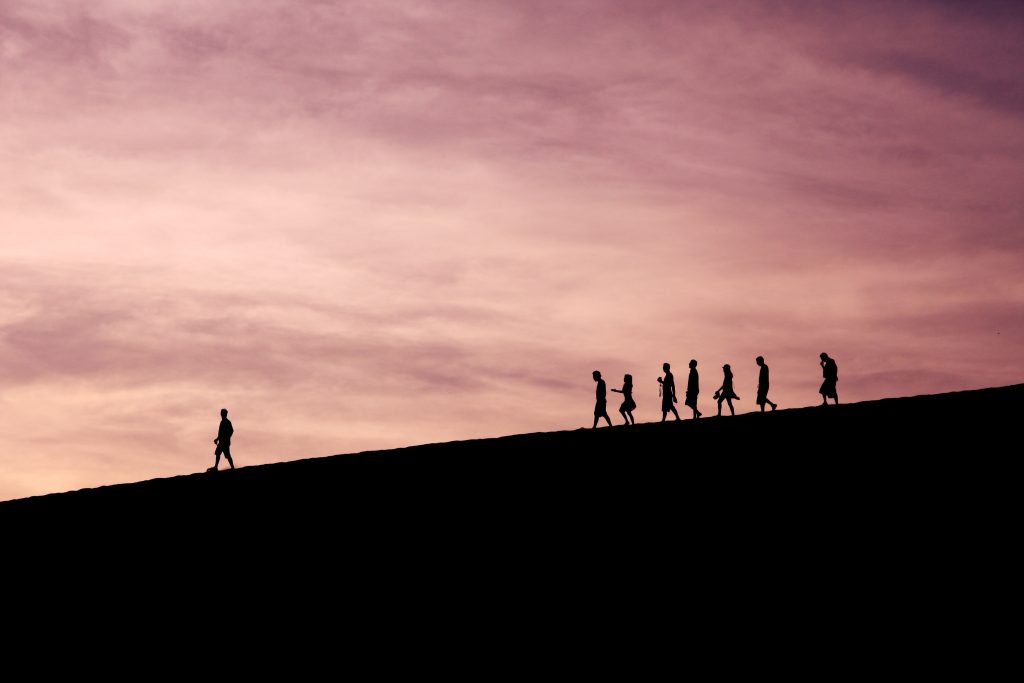
Many people associate leadership with power, authority, position and expertise, but the reality is that leadership is much more nuanced than that. A new perspective is needed.

Here are 3 common misconceptions about being a leader:

Misconception #1: You are a leader only by appointment.

When talking about leadership we often hear ‘Oh, I don’t manage anyone so I can’t be a leader‘. Leadership is not a position or a title that is appointed to you. Anyone can show leadership, regardless of their age, experience, or role. In fact, you can very much be a manager without being a leader. Rather than a title that someone gives you, leadership is a state of mind; a mindset. Opportunities to lead are everywhere. A new graduate joining a multinational company without any prior work experience – can you be a leader? Of course!

Misconception #2: Leadership is only relevant in big or well-known situations

Leadership is not limited to big things or well-known situations and people (take the recent example of Elon Musk and SpaceX). In fact, it is in the everyday small moments as much as it is in the big stories. Every decision you make, every action you take, and every interaction you have with others can be an opportunity to demonstrate leadership. Ultimately, it is about making change happen.

Misconception #3: To show leadership you need to have all the answers, all the time, otherwise people won’t believe in you

Leadership is not about having all the answers. Authentic leadership means owning up to the fact that you don’t have all the answers and getting comfortable with that. Oftentimes you will be doing things that haven’t been done before, so not always having clarity is to be expected. We recently wrote a post on why you need to shed your need to always have the answer in order to be a transformational leader and our top tips for doing so. SPOILER ALERT curiosity, experimentation and openness are key!

So, having read this blog, do you think you are more of a leader than you realised?

Follow us on LinkedIn for more content like this!
Filed Under: Uncategorized

Pause before making your next decision

April 13, 2023 by Neovitae

How often do you take a moment to pause, take a breath, notice your energy, ask questions and truly listen before making a decision?


Our client’s often speak about how they as the leader, feel pressure to have all the answers immediately.

In today’s dynamic economic climate, there is much emphasis placed on speed and agility. This is particularly the case when making decisions. It is deemed essential for survival in business.

But is quicker always better?

Not always.

Relying on heuristics (aka mental shortcuts), while useful in some cases, can also lead to cognitive biases (systematic thinking errors), resulting in sub-optimal decisions.

One such bias is the availability bias whereby we place more importance on readily available information in decision making.

Let’s look at an example …

Imagine you are looking to hire either Lisa or Leon for a critical position in your organisation.

While Lisa is the more qualified candidate, a vivid memory of a mistake she made five years ago during her early days at the company keeps springing to mind. Despite the fact that Lisa acknowledged her mistake at the time and has since made no such errors and is the better candidate, this one negative experience appears to be disproportionately affecting your decision-making process.

This is a classic example of how ease of recall and the emotions evoked can skew our judgment and lead us to make suboptimal decisions.


But, the issue is… you don’t know what you don’t know. How do you know you are falling into the bias trap?

To uncover these thinking patterns and biases, it helps to work with a coach who can provide a safe space to discover new perspectives.

Here are 4 top tips for how to pause before making your next decision

1. Take a step back, take a breath. Observe your inner landscape (thoughts/triggers/biases). What is your immediate reaction, what are you thinking and how and why do you feel that way?


2. Become aware of any patterns and develop a greater understanding of yourself


3. Learn more about why we fall into the bias trap and develop a toolkit to address it


4. Practice, practice, practice. When you can (it isn’t always possible), make a conscious effort to step back, check in with yourself and make decisions with intention rather than on impulse/habit.

By adopting these strategies, you can make better decisions and improve the outcomes of your actions.

And with that, we’ll leave you with a final quote …

“If you want something bigger and better you’ll have to do things differently.”

Check out our LinkedIn page as we are always posting tips on how to develop new perspectives on challenges you may be facing. For example, click here for some quick tips on how to build your beginner’s mindset muscle. This has been a game changer for our clients!


Filed Under: Uncategorized

How do you know when you’ve done enough?

January 24, 2018 by Neovitae

Neovitae Pattern

“Practice makes perfect, but you can over practice”

ModerationI was struck by this post from a colleague Phil Hesketh, that I wanted to share hot of the press:

Shocking news just in from the USA. Researchers have discovered that the more sports teams practice, the better they get. No, really!

Apparently, levels of skill, fitness and teamwork all improve greatly, resulting in more matches being won. But hold your horses. If you don’t have one handy, hold something similar. The research goes on to suggest that the benefits of ‘persistent practice’ dissipate after about four years.

The theory goes that experience and practice leads to overconfidence, complacency, and routine rigidity. But this isn’t a new theory. Over two thousand years ago, Aristotle, the Greek philosopher and head coach of all their national sports sides, said something very similar.  Only in Greek, obviously.

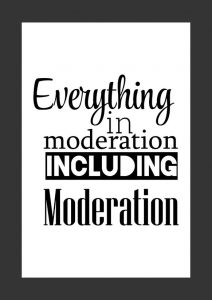
He declared that both ‘excessive and defective exercise destroys the strength’. He went on to say ‘Similarly, drink or food above or below a certain amount destroys the health, whilst that which is proportionate both increases and preserves it.’ So basically, he was championing the idea of moderation in everything. Including moderation.

Now fast forward 2,000 years and you can see how in business today the relationship between experience and performance sometimes takes the form of an inverted U. Companies often enjoy a period of great success just before a quick slide into decline.

Same people, same product, same market, but different results. Whereas, companies and individuals who constantly reinvent themselves often enjoy continued success. Think Branson. Music, banking, trains, planes – even travelling in space in the future.

it’s natural to become complacent.

So what we can we do to stop it happening? Well, Ask all your clients and customers this simple question:

“Is there any aspect of our service we could improve on?”

Find just one thing you could do better and go and do it.

You are probably not doing enough for some clients because their expectations have changed.

And if on a personal level you don’t know when you’ve ‘done enough’ and it’s time to stop, here’s one final clue. It was probably just before you said to yourself ‘I’ve done enough’.

Apparently, levels of skill, fitness and teamwork all improve greatly, resulting in more matches being won. But hold your horses. If you don’t have one handy, hold something similar. The research goes on to suggest that the benefits of ‘persistent practice’ dissipate after about four years. The theory goes that experience and practice leads to overconfidence, complacency, and routine rigidity. But this isn’t a new theory. Over two thousand years ago, Aristotle, the Greek philosopher and head coach of all their national sports sides, said something very similar.

Only in Greek, obviously.

He declared that both ‘excessive and defective exercise destroys the strength’. He went on to say ‘Similarly, drink or food above or below a certain amount destroys the health, whilst that which is proportionate both increases and preserves it.’ So basically, he was championing the idea of moderation in everything. Including moderation.

Now fast forward 2,000 years and you can see how in business today the relationship between experience and performance sometimes takes the form of an inverted U. Companies often enjoy a period of great success just before a quick slide into decline.

Same people, same product, same market, but different results. Whereas, companies and individuals who constantly reinvent themselves often enjoy continued success. Think Branson. Music, banking, trains, planes – even travelling in space in the future.

Filed Under: Uncategorized

Time out – Luxury or necessity?

November 23, 2017 by Neovitae

I had been very busy, running my business and focusing on delivering value for my clients. It had been a particularly tricky time for my family, as my daughters had both transitioned into the next phase at school. I knew I needed to take a break to unwind, re-energise, and reconnect with myself and my ‘why’. I decided to take an extra day out while I was on a trip to North Wales. There is something about the air, the sea and the sea air which I love and which brings an inner peace.

Before I went on my trip though, I felt really guilty about taking time out, and on the surface it looked like I couldn’t afford to take the time, as I was so busy working in my business and delivering great programmes and projects for my clients, plus my younger daughter had been quite ill and had ended up in hospital for a couple of days, so taking even more time out seemed like a luxury I couldn’t afford. My inner wisdom, however, knew that if I was going to be able to continue to stay ahead, build my business to the next level, and achieve my purpose, I would need to challenge my conventional thinking, step up and expand my comfort zone and disrupt the status quo, and maybe change a few things in order to operate at a new level. In other words, I needed an upgrade! New, higher performing batteries!

On the surface, there was no evidence that I needed to change anything, as nothing was ‘broken’ that needed ‘fixing’; however, I knew that it was a good idea, and all I needed to do was to trust myself and not over think my way out of it (which I can often do!). Anyway, my thinking went like this – in the worst case scenario, I would simply take the time out and catch up on some sleep and feel better afterwards. That alone wouldn’t be a bad outcome. In the best case scenario, I would re-energise, see some amazing countryside, reconnect with my ‘why’, and get a few pointers to help me move forward with more purpose. 

The scary thing was that I didn’t really know what I needed to do to achieve the best case scenario, but I decided to take a drop of my own medicine and give myself something to do for the two days that I often give to my clients to do as an exercise, and that was to ask myself to complete the following: “I’d love it if…”. The key, when given this task, is to not over think it, to let go of it, to simply have it in your mind, and to trust that something will come, as and when you are ready. 

The outcome was that I had a fabulous time, appreciating the dramatic scenery of North Wales, discovering a great walk that took me up a large and very steep hill, and which, once I got to the top, gave me an amazing view of the coastline and the surrounding countryside for miles around. The thing I realised was that if I had stayed at the bottom of the hill, there was no way I would have been able to appreciate the view and there was no way I would have been able to see all the amazing things I was able to see from the top, so it really was worth the effort to make the steep climb, even when it got a bit slippery in the mud. 

Upon reflection afterwards, I realised that the hill was a metaphor for my trip. How often am I so deep in the detail (the content), and running fast, that I have no time to look up and see where I am going, to acknowledge my achievements so far, and appreciate the journey and the amazing surroundings that I live in? As Stephen Covey would say, how often are we “too busy sawing” with no time to “sharpen the saw”?

To be honest, I enjoyed my time so much that I had forgotten about the task I had set myself before my journey! Anyway, what transpired was that on my first night home from my trip, I woke up at 3am, my mind buzzing so much that I had to write my thoughts down before I went back to sleep, and all my answers to “I’d love it if…” came flooding out. In fact, what happened is that it took me back to my ‘why’, which is about making a difference (I’ll share this another time!), and it gave me a deeper connection to this ‘why’ at a whole new level. I also had some ideas for how to get started with the next part of my journey.

So what is the learning to share?

How often do we take time out to reconnect with ourselves? It’s not a luxury, it’s essential! If we are going to achieve our vision and purpose (our ‘why’), by not doing it, we are doing a disservice to ourselves and, more importantly, our clients and customers. Without giving ourselves the time out to reflect, review, and take some perspective (see the view), how are we really going to be able to check where we are and see what else we need to do to take the next, possibly bigger step? We will become average people, doing average things. By taking time out, we are able to look from outside in, at ourselves, expand out boundaries and question the status quo and are able to see things differently from a higher place, enabling us to readjust, recalibrate, and find ways to move forward, that will take us ever closer to our goal. 

Lucy Czakan

Filed Under: Uncategorized

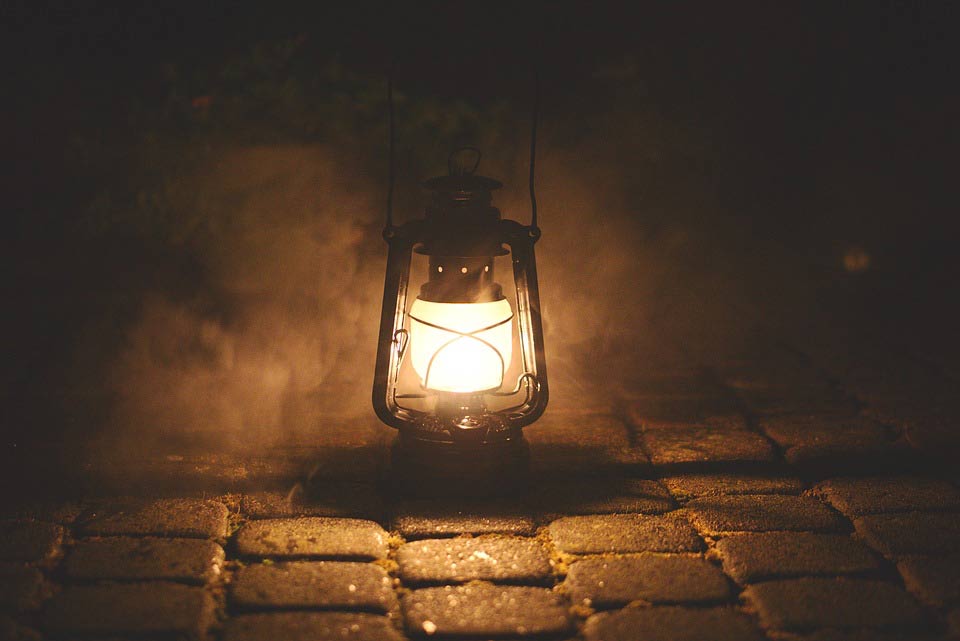
It’s amazing what you can achieve in the dark…

November 23, 2017 by Neovitae

How would it help our performance as a leader if we could simply focus on one step at a time?

Let me share a story of an experience I had recently which highlighted this point to me. Being in darkness enabled me to quieten my thoughts, quieten my mind and focus only on what I could see immediately ahead of me, as a result I was more relaxed and was able to achieve more than I ever imagined I would.

I recently went on a trip to an old slate mine in North Wales with my family, I had read a brief description about it in a brochure, although the description was quite vague… Anyway, I decided that it sounded like a good idea, and when I phoned up to book, they told me the only trip (which was 5 hours long!) I could get on was on that day, in 2 hours’ time. Without time to think, I told my family we were going to visit a mine (that’s all I said), and when we arrived, we were given a safety briefing and given all the climbing gear and ropes ready for our trip.

We were all loaded into 2 old Land Rovers and driven up a very rickety old road up into a village in the hills, once we arrived, we had a 45-minute walk, until we finally arrived at the mine’s entrance, a tiny opening that we had to squeeze into, to get into the mine, which was 7 storeys deep, with hundreds of small caverns. It had been disused since World War 2, and some of the shafts had flooded, so we had to bypass these. The mine was pitch black except for the light from our head torches, and we had to wade through ankle-deep running water (luckily they had pre-warned us to wear wellies!). The trip involved lots of walking in tunnels, going in a boat across a flooded shaft, going on a zip wire over some water between two shafts, climbing a width of a sheer rock face, abseiling down 60 feet into the bottom of a (pitch black) mine shaft, and climbing up 200 steps on a step ladder with running water pouring down the steps, as we climbed.

We found ourselves in a mine shaft, climbing along a ledge of rock about 60 feet across and 60 feet deep. I had decided early on that I would make sure I was the first to go, as I may have changed my mind if I had seen others do it before me. All I remember is being able to just about see my foot and the next bit of rock in front of me. I remember thinking ‘this is scary!’, to be honest, I couldn’t really see very much, and didn’t have much of a reference point to be scared by! So I decided that this thought wasn’t valid and so proceeded.

The whole experience took me and my oldest daughter (who is afraid of heights) outside of our comfort zone, and looking back, it required a lot of stamina and courage, as it was taking me outside of what I knew to be my “comfort zone”, however, because I did it in the dark of the cave and the guides took us through one step at a time, I was able to do it without realising the extent of what I had actually done.

How much do our thoughts hold us back? How often do we spend too much time over thinking something and convincing ourselves it’s a bad idea by the time we’ve intellectualised it? How often do we think so much about something, that we convince ourselves that it’s too difficult, and in doing so, make our lives more difficult and stressful and hold ourselves back?

I know that the darkness in that cave enabled me to achieve more than if it had been light! Seeing how high up I was would have scared me to death, and my thoughts would have taken over in my head and convinced me that it was too scary and dangerous to attempt.

Sometimes, the enormity of a task can seem daunting and impossible, if we can just break it down into small chunks, one step at a time and only look at what is immediately in front of us, then the task becomes achievable and easier as a result. When you get to the end, it’s simply just the final step! You are also more likely to enjoy the journey along the way, which is the most important point. After all, if you aren’t going to enjoy it, why bother?!

By Lucy Czakan

Filed Under: Uncategorized

  • Home
  • Who we are
  • Our values
  • Our services
  • Blog
  • Contact us
  • LinkedIn

Copyright Neovitae 2022 Terms Of Use · Privacy Policy · Website Navitas Design